Subscribe
Get OpenSSL Foundation news and highlights direct to your inbox through our monthly newsletter.
In 2023, Frederik Wedel-Heinen volunteered to get the ball rolling on DTLS 1.3 and this August the DTLS 1.3 branch was merged. As Matt Caswell noted back in 2023:
I'm saying all of this not to put you off, but just to be clear about the level of effort this is likely to require. It is not unusual for large features to take >1 year to get into the codebase. This particular feature is probably more complex than any of those.
Given that OpenSSL already supported TLS 1.3 and DTLS 1.2, it doesn’t seem like DTLS 1.3 should be that difficult. One difficulty, however, comes from the extent of changes from 1.2 to 1.3. It’s the subject of a rather long page on the OpenSSL wiki. A big draw for 1.3 is that it reduces back and forth messages (“roundtrips”), which requires extensive code changes. Further, the new protocol needs new tests to make sure everything works as it’s supposed to.
Meanwhile, the OpenSSL Library was in the process of moving to a time-based release strategy. Instead of waiting for key features to be completed, the new process releases a version of OpenSSL every 6 months with whatever features are ready for production. That means larger features, such as DTLS 1.3, must get developed on a separate branch. DTLS 1.3 pioneered the feature branch process on the OpenSSL Library.
But Frederik wasn’t deterred and created a development plan. He proceeded to lay the foundation for DTLS 1.3 and started the feature branch. By September 2025, he reported:
All features for DTLS 1.3 have been implemented, but we need to fix stability. I.e. what happens on dropped records fragments, make sure that TLS 1.3 features are available for DTLS 1.3 as well.
Interest in DTLS 1.3 increased since it’s required for using post-quantum cryptographic algorithms such as ML-KEM, which had been implemented in OpenSSL 3.5 earlier that year. The OpenSSL Foundation received funding from the Comcast Innovation Fund and Cisco Systems to develop DTLS 1.3. As a part of Cisco’s sponsorship, Ryan Hooper joined the Foundation.
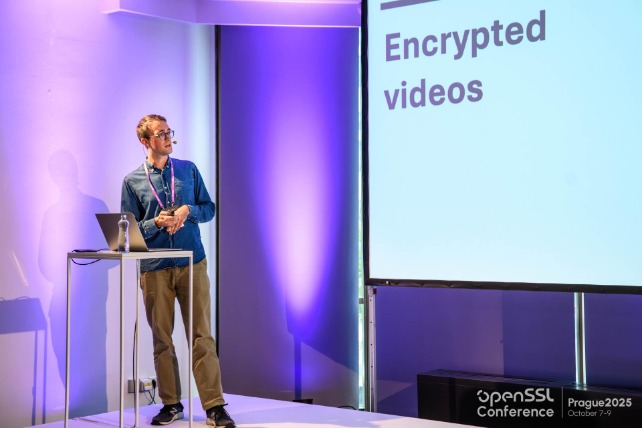
So the stage was set for Michael Baentsch to ask on the OpenSSL communities platform if there was interest in DTLS 1.3 support? The answer was “yes” and since most of the interested parties were going to the OpenSSL Conference around the same time, we set up a meeting. At that meeting it was agreed that Ryan would take the lead for finishing DTLS 1.3 with a target of 4.0. Frederik documented what was left to be done.
Ryan got to work. As the 4.0 code freeze approached, however, it became clear that DTLS 1.3 needed more tests. Especially important were interoperability tests with legacy systems. Thankfully as a Cisco employee, Ryan has access to many such systems. He also set up automated tests to ensure interoperability with WolfSSL and NSS, two other libraries that currently offer DTLS 1.3. Often the final details of software projects require outsized effort to complete and this project was no different.
After the feature branch was merged, DTLS 1.3 was included in the 4.1 beta. Once a feature becomes available on an open source project, the public starts testing it. Notably, Mounir IDRASSI put DTLS 1.3 through its paces and contributed 18 issues and 21 pull requests. It’s always better to find problems before a release, so it helps that most of those reports and fixes came before 4.1 was released in October.
Ultimately DTLS 1.3 was a large project that required all sorts of people to complete. That's where an open source project excels.
Cover photo by Ronald Crow on Unsplash
Stay up to date with OpenSSL Foundation news and insights
Join our mission to protect global digital infrastructure